

Reggae Sumfest has never been just about the music. For more than three decades, the festival has stood as one of the Caribbean’s most influential cultural events, serving as an annual showcase where music, fashion, art, and identity intersect. Every year, fans eagerly anticipate not only the performances from Jamaica’s biggest stars but also the unforgettable fashion moments that emerge from the stage and the crowd. The event has traditionally been regarded as Jamaica’s equivalent of a fashion runway, where artists, celebrities, influencers, designers, and patrons push creative boundaries and establish trends that ripple throughout the Caribbean and beyond.
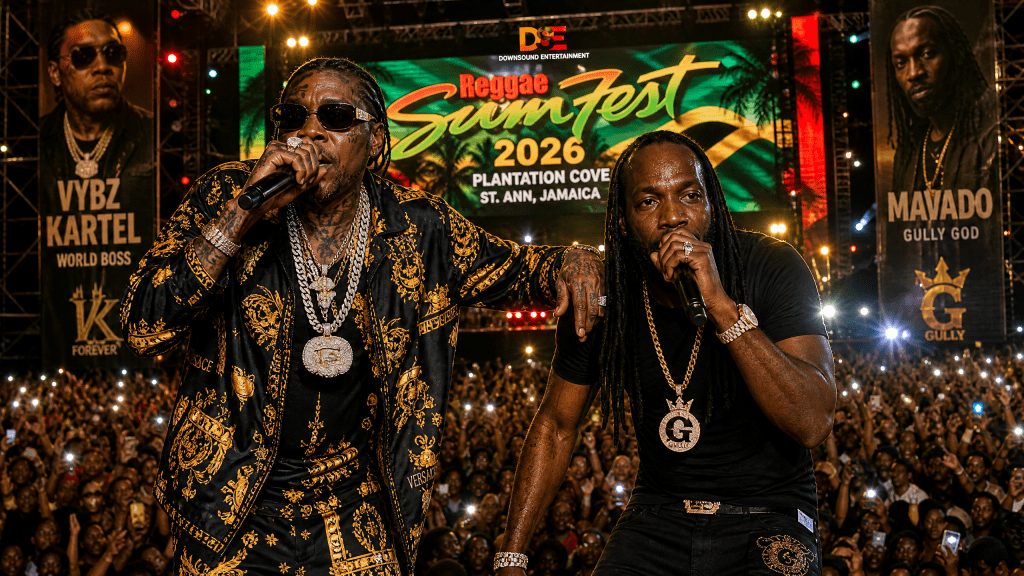
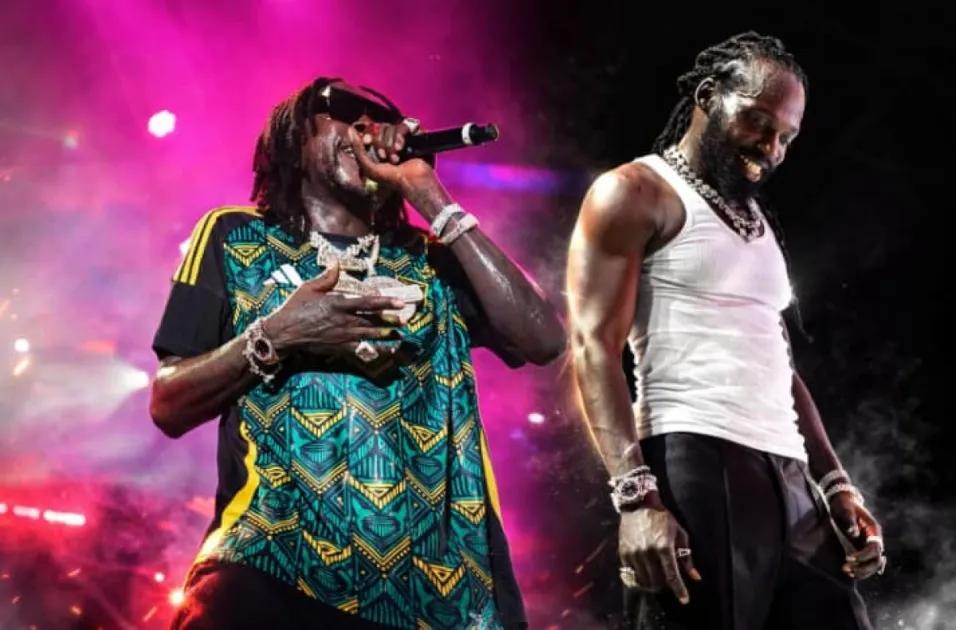
The 2026 edition, “A Taste of Reggae Sumfest,” undoubtedly delivered one of the greatest musical moments in the festival’s history. The long-awaited reunion of Vybz Kartel and Mavado was an emotional and historic performance that captivated dancehall fans worldwide. Their appearance together represented unity, growth, and the closing of one of dancehall’s most famous rivalries. Musically, the night exceeded expectations. Visually, however, it told a very different story.
From a fashion perspective, Reggae Sumfest 2026 felt noticeably restrained. One of the defining traditions of the festival has always been the opportunity for artists to transform the stage into a spectacle of style. Fans have grown accustomed to seeing custom-designed garments, elaborate stage costumes, luxury fashion labels, avant-garde tailoring, dramatic accessories, and bold styling choices that complement the energy of the performances. This year, those memorable fashion statements were comparatively few.
Perhaps the greatest surprise was the approach taken by many of the headline performers. Jamaican entertainers have consistently demonstrated that fashion is an extension of performance. Whether through extravagant stagewear, carefully curated designer collaborations, or uniquely Jamaican interpretations of global fashion trends, artists have often used Sumfest to reinforce their personal brands. In 2026, many performers appeared to prioritize comfort and simplicity over theatrical presentation. While there is nothing inherently wrong with minimalist styling, the overall visual impact lacked the excitement and innovation that audiences have traditionally associated with Jamaica’s premier music festival.
Several artists wore outfits that, while functional for performing, failed to create memorable fashion moments. Coordinated styling, intricate detailing, custom tailoring, and high-concept wardrobe design were noticeably limited throughout much of the evening. Few ensembles generated the type of conversation that normally dominates social media following Sumfest. Instead of audiences discussing iconic looks alongside unforgettable performances, the conversation remained focused almost exclusively on the music.
This represented a missed opportunity, particularly considering the historic significance of the event. A reunion of Vybz Kartel and Mavado was the type of cultural milestone that deserved equally memorable visual storytelling. Fashion has always played an important role in preserving entertainment history. Long after performances have ended, audiences often remember the signature outfits, striking silhouettes, and instantly recognizable images that become permanently associated with legendary concerts. Reggae Sumfest 2026 possessed every ingredient necessary for such moments, yet relatively few materialized.
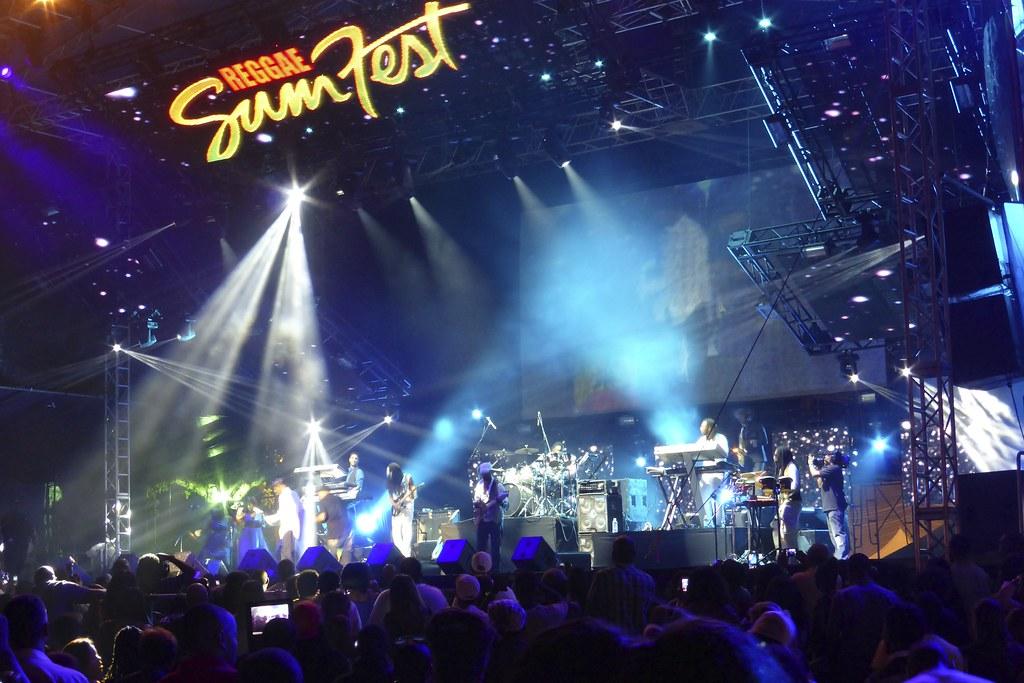
The absence of bold fashion was also evident among supporting performers. Jamaica is home to an extraordinary pool of creative designers, stylists, makeup artists, hair artists, and costume specialists whose work has gained international recognition. Major entertainment events provide an opportunity to celebrate that creative talent. While there were certainly artists who embraced distinctive styling and demonstrated individuality, the overall presentation did not consistently reflect the exceptional standard that Jamaica’s fashion industry is capable of producing.
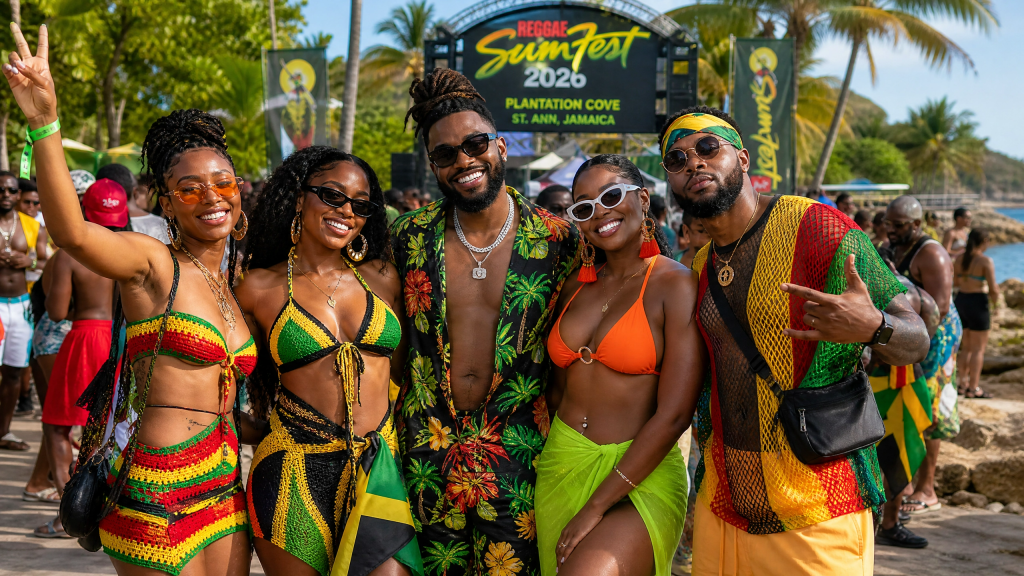
Equally noticeable was the fashion presented by festival patrons. Historically, attending Reggae Sumfest has been an opportunity for guests to express themselves through vibrant colours, daring silhouettes, luxury streetwear, handcrafted accessories, and uniquely Caribbean aesthetics. Many attendees prepare their outfits months in advance, carefully planning every detail from footwear and jewellery to hairstyles and makeup. This year, however, much of the audience appeared to embrace safer and more familiar fashion choices.
Instead of bold experimentation, many attendees gravitated toward popular festival trends already seen across social media throughout the year. Matching sets, denim combinations, crop tops, oversized T-shirts, athletic-inspired looks, and fast-fashion pieces dominated many of the visible styles. While these choices reflected current fashion trends, they lacked the originality and creative expression that have traditionally distinguished Reggae Sumfest from other music festivals.
The event also highlighted a broader conversation about the evolving relationship between dancehall culture and fashion. Dancehall has historically influenced global style, introducing daring colour palettes, oversized silhouettes, luxury accessories, statement jewellery, and fearless self-expression long before many mainstream fashion houses embraced similar aesthetics. Artists such as Yellowman, Shabba Ranks, Beenie Man, Bounty Killer, Lady Saw, Spice, Popcaan, and Vybz Kartel all helped shape visual identities that became inseparable from their musical legacies. Against that backdrop, the comparatively understated presentation at Reggae Sumfest 2026 felt unusual.
Fashion should never overshadow the music, but neither should it become an afterthought. The strongest performances often combine exceptional musical talent with compelling visual presentation. Stage design, wardrobe, lighting, choreography, and styling work together to create moments that remain unforgettable for years. Reggae Sumfest has built much of its international reputation by delivering exactly that combination.
It is important to acknowledge that fashion remains deeply personal and subjective. Some attendees appreciated the more relaxed aesthetic and viewed it as authentic rather than overly theatrical. Others preferred the emphasis on musical excellence rather than extravagant wardrobes. These perspectives are equally valid and demonstrate that style is interpreted differently by every individual. Nevertheless, from the standpoint of a fashion-focused review, the event offered fewer iconic looks than many previous editions of the festival.
Looking ahead, Reggae Sumfest has an opportunity to once again position itself as the Caribbean’s premier fashion stage. Greater collaboration between artists, local designers, stylists, costume creators, and creative directors could elevate future editions into complete visual experiences that celebrate Jamaican excellence both musically and artistically. The festival possesses all the ingredients necessary to become not only the home of reggae and dancehall but also one of the region’s most influential fashion showcases.
Ultimately, Reggae Sumfest 2026 will be remembered first and foremost for its extraordinary music and the historic reunion of Vybz Kartel and Mavado. Those performances secured the festival’s place in dancehall history. Yet from a fashion perspective, the event left room for growth. The artists delivered timeless hits, the audience celebrated Jamaican culture, and Plantation Cove provided a stunning backdrop. What was missing was the bold, fearless, trend-setting fashion that has long defined the visual identity of Reggae Sumfest. In future editions, many fashion enthusiasts will undoubtedly hope to see performers and patrons once again embrace the creativity, confidence, and innovation that transformed Sumfest into one of the Caribbean’s most anticipated style spectacles as well as its greatest musical celebration.
By: Dwayne Hinds


Leave a Reply