

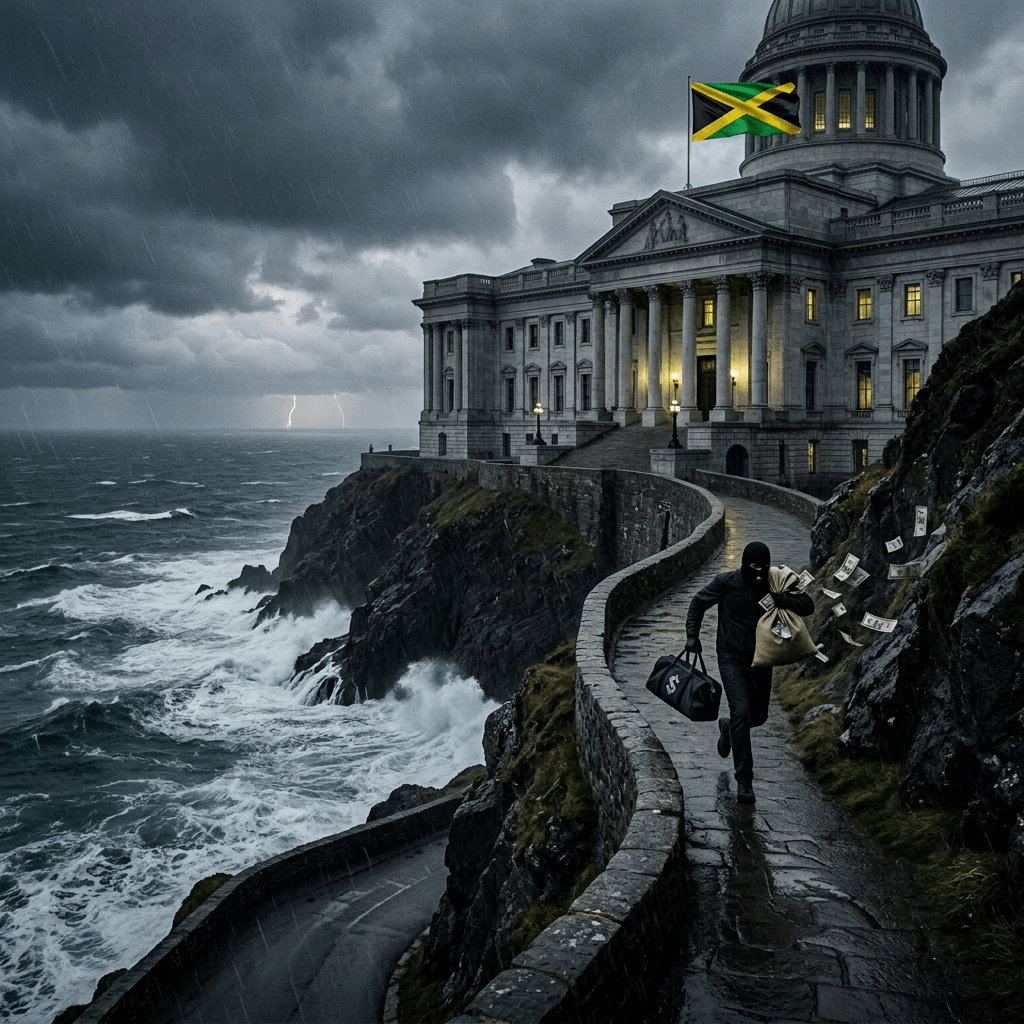
by Dwayne Hinds
Jamaica, a land of resilience and vibrant culture, has long been accustomed to the seasonal threats of the Atlantic hurricane season. However, in recent years, the storms that have battered our shores have exposed a far more dangerous vulnerability: a systemic failure in governance and a deepening crisis of public trust. As the administration of Prime Minister Andrew Holness moves to establish the National Reconstruction and Resilience Authority (NaRRA), the Jamaican people are left wondering if this is a genuine effort at recovery or merely a new mechanism for the mismanagement of public funds.
The recent handling of Hurricane Beryl in 2024 and the subsequent Hurricane Melissa in 2025 has been characterized by many as a masterclass in administrative incompetence.
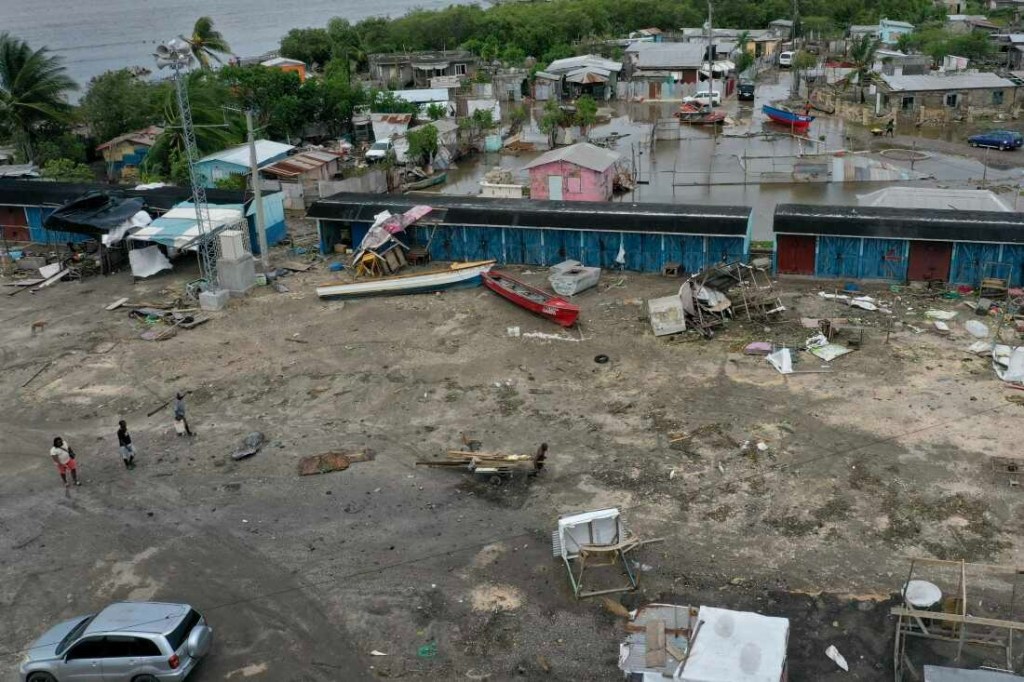
The path of destruction left by Hurricane Beryl in 2024, exposing the fragility of Jamaica’s infrastructure. From the slow rollout of relief to the questionable allocation of resources, the government’s response has left thousands of Jamaicans in a state of prolonged distress. Now, with the introduction of the NaRRA Bill, the government is asking for a “blank cheque” to manage billions in reconstruction funds, all while exempting itself from the very procurement rules designed to prevent corruption.
For the average Jamaican, the government’s handling of public money has become a dark joke; a “patty shop” operation where funds go missing with no clear idea of where they are going. These are my thoughts exploring the mismanagement of recent hurricanes, the dangerous precedents set by the NaRRA Bill, and the fundamental breakdown in trust between the Jamaican people and their government.
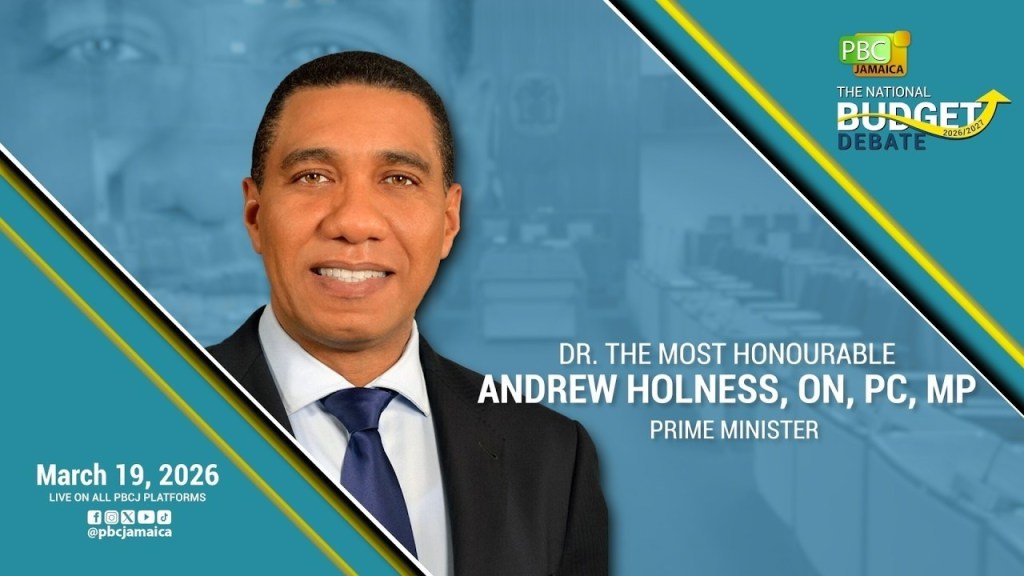
Prime Minister Andrew Holness during the 2026 Budget Debate, where he positioned the NaRRA Bill as a central mechanism for recovery.
The mismanagement began in earnest with Hurricane Beryl in July 2024. Despite early warnings and a supposedly robust disaster preparedness framework, the reality on the ground was one of chaos and neglect. In the southern and western parishes, which bore the brunt of the storm, relief was agonizingly slow to arrive. Families were left without roofs, electricity, or clean water for weeks, while the government’s communication remained focused on high-level optics rather than grassroots delivery.
The situation only worsened with Hurricane Melissa in October 2025.
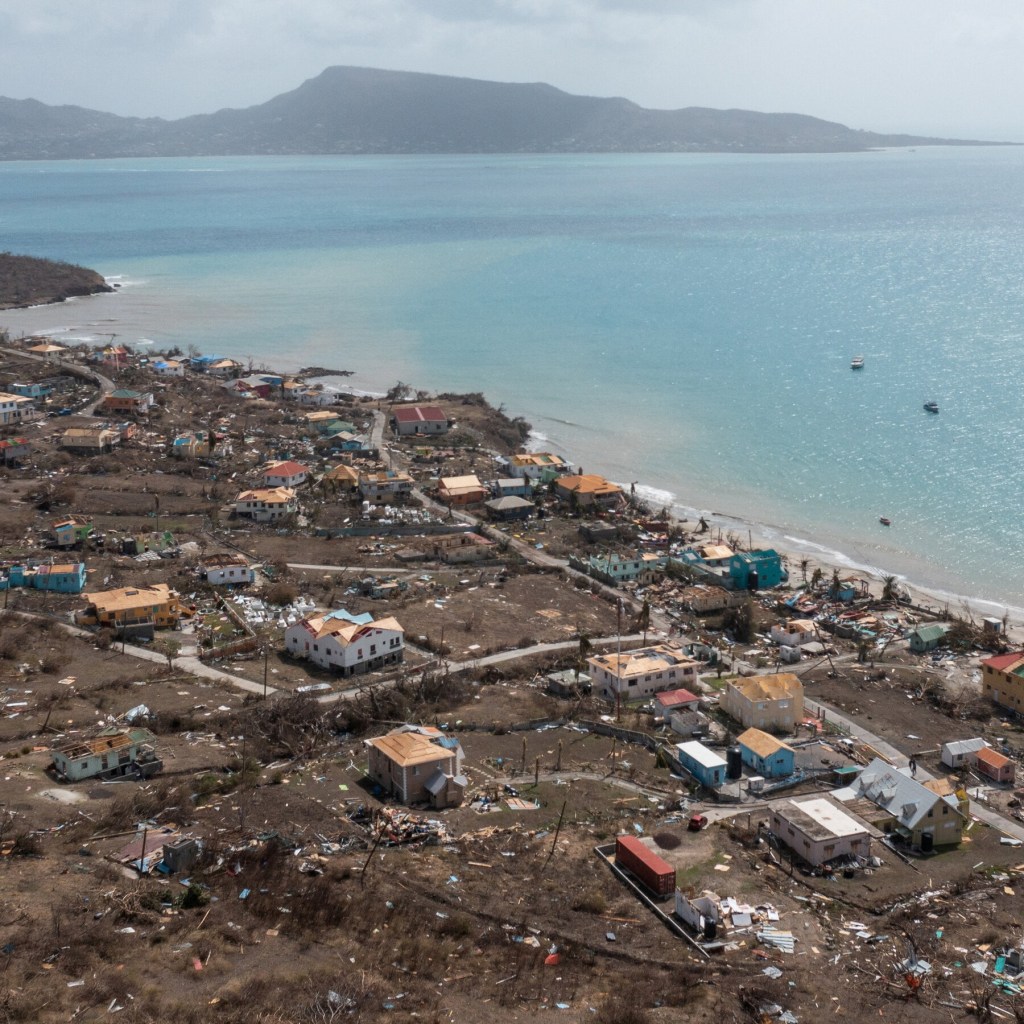
Aerial view of the devastation, where relief efforts were criticized for being slow and politically biased. The “Melissa moment,” as the Prime Minister has called it, was supposed to be a turning point for national resilience. Instead, it became a symbol of the government’s inability to learn from its past mistakes. The recovery efforts in parishes like St. Elizabeth and Westmoreland were marred by allegations of political favoritism in the distribution of relief supplies and a lack of transparency in the awarding of emergency repair contracts.
Critics have pointed out that while the government was quick to announce multi-billion dollar financing packages from international partners like the IMF and World Bank, the actual impact on the lives of affected citizens has been minimal. The disconnect between the “macro-economic success” touted by the administration and the “micro-economic misery” experienced by the people has never been more apparent.
The NaRRA Bill: An “Implementation Machine” or a Corruption Engine?
In April 2026, Prime Minister Andrew Holness tabled the National Reconstruction and Resilience Authority (NaRRA) Bill, positioning it as a central mechanism for recovery and economic resurgence. He described it as an “implementation machine” designed to eliminate the fragmentation and inter-agency delays that have historically slowed project delivery.
However, the fine print of the Bill has sparked a firestorm of criticism. One of the most contentious provisions is the exemption of NaRRA from the standard procurement regime under the Public Procurement Act of 2015. The government argues that this is necessary for “operational speed and flexibility” in the face of a national emergency. But to a public already weary of corruption scandals, this looks like a recipe for disaster.
I label this Bill as a “blank cheque without accountability.” The concern is that by bypassing standard procurement rules, the government is creating a “fiscal free-for-all” where contracts can be awarded to political cronies without the oversight necessary to ensure value for money. The risk of corruption being masked by the “emergency” nature of the reconstruction is a shadow that hangs heavily over the NaRRA proposal.
The phrase “patty shop” has become a common refrain in Jamaican political discourse, symbolizing a lack of professional standards and a casual approach to the management of public resources. When billions of dollars are announced for relief and reconstruction, yet the people on the ground see little to no improvement in their circumstances, the question inevitably arises: where is the money going?
The lack of a clear, transparent audit of hurricane relief funds has only fueled these suspicions. In the wake of Hurricane Beryl, reports emerged of procurement records for dozens of contracts, valued at hundreds of millions, that simply could not be found. This is not just an administrative failure; it is a systemic breakdown in accountability. When the government operates like a patty shop, where transactions are informal and records are non-existent, the public’s trust is the first casualty.
The Jamaican people are tired of hearing about “missing funds” and “unaccounted for resources.” They see the lavish lifestyles of political elites while their own communities remain in a state of disrepair. The perception that public money is being siphoned off into private pockets is not just a cynical theory; it is a conclusion drawn from years of witnessing the same patterns of behavior.
My skepticism surrounding the NaRRA Bill is not just about the current administration; it is rooted in a long and painful history of financial scandals and “missing money” associated with the Jamaica Labour Party (JLP) over the years. To understand why the Jamaican people are so wary of a “blank cheque” for reconstruction, one must look at the trail of unaccounted funds that has defined JLP governance.
One of the most egregious examples of missing money in recent history is the Petrojam scandal. An audit by the Auditor General revealed a “cash splash” at the state-owned refinery, where billions of dollars were unaccounted for. From “missing oil” valued at over $5 billion to the construction of a perimeter wall that cost three times the original estimate, Petrojam became a symbol of systemic corruption.
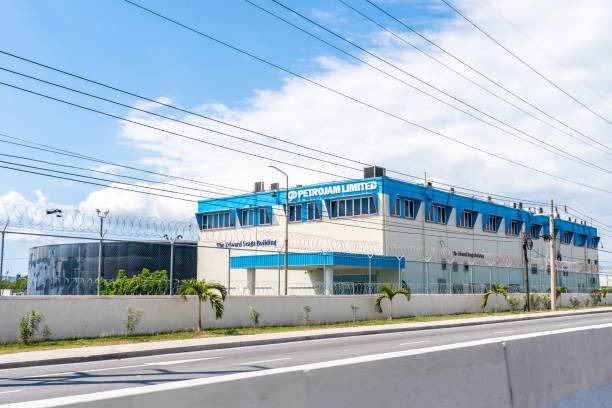
The Petrojam refinery, where billions in “missing oil” and questionable contracts became a national scandal.
The scandal saw the resignation of several high-ranking officials, but the fundamental question remained: where did the money go? The use of “direct emergency contracting” to award sweetheart deals to preferred contractors is a pattern that many fear will be repeated under the NaRRA Bill. When documents for multi-million dollar contracts “cannot be found,” it is clear that the “patty shop” mentality is not just a metaphor; it is a deliberate strategy for avoiding accountability.
The SSL Scandal: Usain Bolt and the Missing Billions
The recent Stocks and Securities Limited (SSL) fraud scandal has further eroded public trust. While the government has attempted to distance itself from the private investment house, the fact remains that SSL was a regulated entity under the Financial Services Commission (FSC). The loss of over $4.7 billion, including more than US$12 million from track legend Usain Bolt, has sent shockwaves through the nation.

Track legend Usain Bolt, who lost millions in the SSL fraud scandal, highlighting the failure of state regulatory bodies.
The revelation that Prime Minister Andrew Holness himself had an account at SSL, which he closed just before the scandal broke, has raised serious questions about “insider knowledge” and the timing of regulatory interventions. For the average Jamaican, the SSL saga is just another example of how the “big man” gets his money out while the rest of the country is left to suffer the consequences of a failed system.
The SSL building on Hope Road, now a monument to one of the largest financial frauds in Jamaican history.
The Ruel Reid and CMU Scandal: Education Funds in the Crosshairs
The education sector has not been spared from the JLP’s legacy of missing money. The scandal involving former Education Minister Ruel Reid and the Caribbean Maritime University (CMU) exposed a web of corruption where public funds intended for education were allegedly siphoned off through shell companies and questionable consultancy fees.
Former Education Minister Ruel Reid, whose involvement in the CMU scandal highlighted the misuse of funds intended for Jamaica’s youth.
The “missing millions” from the CMU were not just numbers on a spreadsheet; they represented lost opportunities for Jamaican students. When the very people entrusted with the future of our children are accused of using public money as a personal piggy bank, the breakdown in the social contract is complete.
With this history of scandals as a backdrop, the NaRRA Bill feels less like a tool for resilience and more like a mechanism for more of the same. The government’s insistence on bypassing procurement rules is a direct echo of the “emergency” tactics used in the Petrojam and CMU scandals. By centralizing power in the hands of a few, the Bill creates an environment where “missing money” is not just a risk; it is an inevitability.
The Jamaican people are being asked to trust a government that has consistently failed to account for the money it already has. They are being asked to believe that this time will be different, even as the same patterns of behavior; the lack of transparency, the political favoritism, and the “patty shop” record-keeping; continue to persist.
The fundamental issue at the heart of the NaRRA debate is not just about institutional design; it is about trust. A government can create the most sophisticated “implementation machine” in the world, but if the people do not trust the hands that operate it, it will never be successful.
The trust deficit in Jamaica is at an all-time high. Decades of corruption scandals have left a deep scar on the national psyche. The people no longer believe that the government has their best interests at heart. They see the NaRRA Bill as just another way for the powerful to enrich themselves at the expense of the vulnerable.
This lack of trust has real-world consequences. It undermines the effectiveness of disaster preparedness efforts, as citizens are less likely to follow government directives if they believe the system is rigged against them. It also hinders national development, as the mobilization of private capital; a key pillar of the NaRRA strategy; requires a level of stability and transparency that the current administration has failed to provide.
The mismanagement of recent hurricanes and the introduction of the NaRRA Bill represent a critical juncture for Jamaica. We cannot continue to operate on a model of “patty shop” governance where accountability is an afterthought and public funds are treated as a private piggy bank.
The Jamaican people are not asking for a perfect institution; they are asking for an honest one. They want to see their schools rebuilt, their roads repaired, and their communities made resilient, but they want to know that every dollar spent is being used for its intended purpose.
Real reconstruction requires more than just a new authority; it requires a fundamental shift in the culture of governance. It requires a commitment to transparency that goes beyond optics and a dedication to accountability that is grounded in the rule of law. Until the government can prove that it can be trusted with the people’s money, the NaRRA Bill will remain a symbol of everything that is wrong with Jamaican politics.
The storm clouds may have passed, but the crisis of trust remains. It is time for the government to stop the misdirection, stop the “patty shop” operations, and start the hard work of earning back the trust of the Jamaican people. The future of our nation depends on it.

Public calls for transparency and accountability in the management of hurricane relief funds.
The Anatomy of Mismanagement: From Beryl to Melissa
To truly grasp the depth of the mismanagement, one must look at the specific failures that have come to define the post-hurricane landscape in Jamaica. Hurricane Beryl, while not a direct hit of the highest magnitude, exposed the fragility of our national infrastructure and the inadequacy of our emergency response protocols. In the immediate aftermath, the government’s focus seemed to be on the “blue economy” and international optics, while residents in St. Elizabeth were left to fend for themselves in the dark.
The distribution of tarpaulins and basic food supplies became a political theater. Reports surfaced of “green-clad” individuals receiving priority in relief lines, a blatant politicization of human suffering that has no place in a modern democracy. This was not just a failure of logistics; it was a failure of morality. When a government uses a national disaster to reward its supporters and punish its detractors, it forfeits its right to lead.
Then came Hurricane Melissa in 2025, a storm that was supposed to test our “new and improved” resilience. Instead, it revealed that the lessons of Beryl had been entirely ignored. The drainage systems in our major towns, which the government claimed had been cleared, were overwhelmed within hours, leading to catastrophic flooding. The “emergency” repair contracts that were handed out in the days following the storm were often given to contractors with little to no experience in disaster reconstruction, leading to shoddy work that will likely fail in the next rainy season.
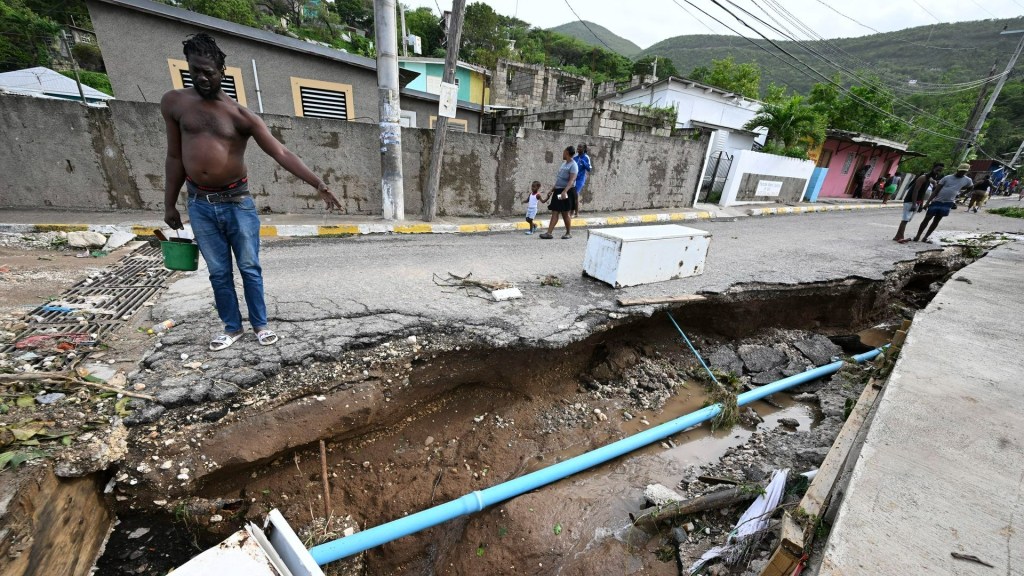
Severe road damage following the hurricane, highlighting the urgent need for transparent and effective reconstruction.
The Prime Minister says that the people of Jamaica are not waiting for a “perfect institution,” but for a “functioning one.” He is right, but a functioning institution is one that is accountable to the people it serves. A machine that moves money quickly but without oversight is not a functioning institution; it is a dangerous one.
The Jamaican people are watching. They are watching the “patty shop” operations, they are watching the missing millions, and they are watching the NaRRA Bill. They know that resilience is not just about stronger buildings; it is about a stronger social contract. And that contract is currently being torn to shreds by a government that seems more interested in its own survival than in the prosperity of its citizens.
It is time to put an end to the misdirection. It is time to stop the “blank cheques” and the “fiscal free-for-alls.” It is time for a government that respects the intelligence and the dignity of the Jamaican people. Until that happens, no amount of “reconstruction” will ever be enough to fix what is truly broken in our nation.
As an individual that doesn’t only like to point out the problem but a solution orientated person; this is my Proposed Accountability Clauses for the National Reconstruction and Resilience Authority (NaRRA) Bill
To address the critical concerns regarding transparency, accountability, and public trust in the management of disaster relief and reconstruction funds, the following four clauses are proposed for inclusion in the National Reconstruction and Resilience Authority (NaRRA) Bill. These clauses aim to legally bind the government to responsible financial stewardship and provide mechanisms for oversight and redress.
Clause 1: Strict Adherence to Public Procurement Act with Limited, Transparent Derogations
(1) Notwithstanding any provision to the contrary, the National Reconstruction and Resilience Authority shall, in all its procurement activities, adhere strictly to the provisions of the Public Procurement Act, 2015, and its subsidiary regulations.
(2) Any derogation from the Public Procurement Act, 2015, for reasons of urgency or national emergency, shall be strictly limited to circumstances where:
(a) An immediate and demonstrable threat to life, public health, or national security exists, requiring an expedited response that cannot reasonably be achieved through standard procurement procedures;
(b) Such derogation is approved by a two-thirds majority vote of both Houses of Parliament, following a detailed submission by the Authority outlining the specific emergency, the necessity of the derogation, the estimated financial impact, and the proposed alternative procurement method;
(c) The period of derogation shall not exceed six (6) months, renewable only upon further parliamentary approval under the conditions stipulated in sub-clause (2)(b); and
(d) All contracts awarded under such derogated procedures shall be publicly disclosed within seven (7) days of their execution, including contractor details, contract value, scope of work, and the justification for emergency procurement.
(3) The Auditor General shall have immediate and unfettered access to all records, documents, and communications related to procurement activities conducted under any derogation, and shall be mandated to conduct a special audit of such procurements within three (3) months of the expiry of the derogation period, with the findings to be tabled in Parliament and made public.
Clause 2: Establishment of an Independent Oversight and Audit Committee
(1) There shall be established an Independent Oversight and Audit Committee to monitor the operations, financial management, and project implementation of the Authority.
(2) The Committee shall comprise seven (7) members, including:
(a) A retired judge of the Supreme Court or Court of Appeal, who shall serve as Chairperson;
(b) A representative nominated by the Auditor General;
(c) A representative nominated by the Contractor General;
(d) A representative from a recognized professional body of accountants;
(e) A representative from a recognized professional body of engineers or project managers;
(f) A representative from a non-governmental organization with expertise in disaster relief or community development, nominated by a consortium of such organizations; and
(g) A representative of the Parliamentary Opposition, nominated by the Leader of the Opposition.
(3) The Committee shall have the power to:
(a) Access all financial records, project documents, meeting minutes, and internal communications of the Authority;
(b) Conduct independent investigations into any aspect of the Authority’s operations, including allegations of fraud, waste, or abuse;
(c) Commission forensic audits or technical reviews as deemed necessary; and
(d) Submit quarterly reports to both Houses of Parliament and the public, detailing its findings, recommendations, and any instances of non-compliance or mismanagement.
(4) The Authority shall be legally obligated to respond to all recommendations and directives of the Committee within thirty (30) days, and any failure to comply shall be reported to Parliament and may result in legal action.
Clause 3: Comprehensive Public Transparency and Reporting Requirements
(1) The Authority shall establish and maintain a publicly accessible online portal, updated no less frequently than weekly, containing comprehensive information on all its activities.
(2) The online portal shall include, but not be limited to, the following information:
(a) Detailed budgets and expenditure reports, broken down by project, contractor, and category of expense;
(b) A register of all contracts awarded, including contract value, scope of work, contractor details, and the procurement method used;
(c) Progress reports for all ongoing projects, including timelines, milestones, and photographic evidence of work completed;
(d) Minutes of all board meetings and key decision-making processes, subject to redaction only for reasons of national security or personal privacy as defined by law;
(e) An easily searchable database of all assets acquired and disposed of by the Authority; and
(f) A mechanism for public feedback and complaints, with a guaranteed response within fourteen (14) days.
(3) The Authority shall publish an annual report, audited by an independent external auditor, which shall be tabled in Parliament and made publicly available within three (3) months of the end of each financial year. This report shall include a performance assessment against key performance indicators (KPIs) and a full accounting of all funds received and expended.
(4) Any deliberate misrepresentation or omission of material information from the public portal or annual reports shall constitute a criminal offense, punishable by imprisonment and substantial fines.
Clause 4: Legal Penalties for Mismanagement, Fraud, and Dereliction of Duty
(1) Any officer, employee, or member of the Authority, or any contractor or sub-contractor engaged by the Authority, who is found to have engaged in acts of fraud, corruption, embezzlement, or gross negligence in the performance of their duties or contractual obligations, shall be subject to the full force of the law, including but not limited to prosecution under the Corruption Prevention Act, the Proceeds of Crime Act, and other relevant criminal statutes.
(2) In addition to criminal penalties, any individual or entity found responsible for financial mismanagement, waste, or abuse of funds shall be liable to:
(a) Repay all misappropriated funds, with interest, to the Consolidated Fund;
(b) Forfeit any assets acquired through illicit means;
(c) Be permanently debarred from holding any public office or engaging in any contract with the Government of Jamaica; and
(d) Face civil action for damages incurred by the Authority or the Government of Jamaica.
(3) The NaRRA Bill shall explicitly empower the Director of Public Prosecutions and the Integrity Commission to initiate investigations and prosecutions against any individual or entity suspected of malfeasance related to the Authority’s operations, without requiring prior approval from any political office.
(4) Whistleblower protection mechanisms shall be robustly enshrined within the Bill, ensuring that individuals who report instances of corruption or mismanagement are fully protected from retaliation, and providing incentives for such reporting.


Leave a Reply