

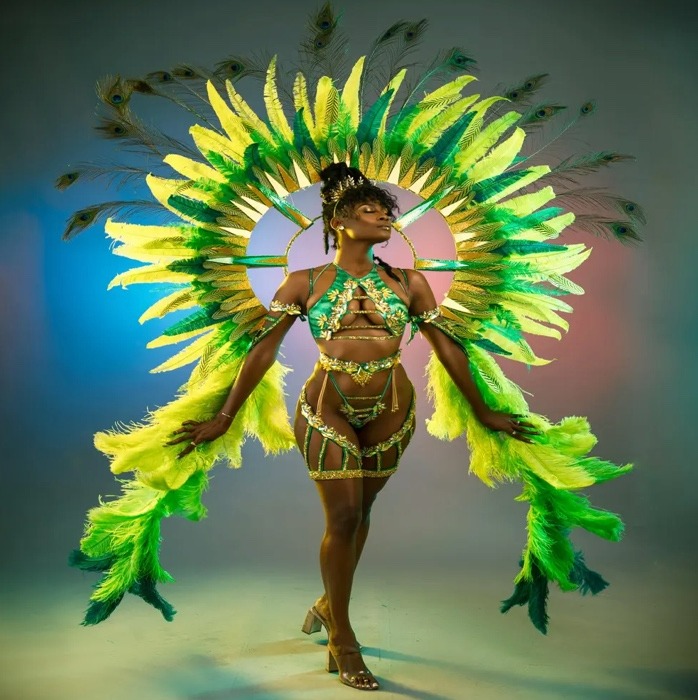
by Dwayne Hinds
Jamaican Carnival, a kaleidoscope of color, sound, and movement, has long been celebrated as one of the island’s most exhilarating cultural expressions. From the pulsating rhythms of soca to the sea of revelers flooding the streets of Kingston, the event is a testament to the island’s ability to adopt and adapt Caribbean traditions. However, beneath the shimmering surface of sequins and the towering heights of feathered backpacks, a growing sentiment of dissatisfaction is brewing among seasoned masqueraders and cultural critics alike. The critique is simple yet profound: despite the passing years, the costumes of Jamaican Carnival have failed to truly evolve, leaving us with a repetitive “same look” that has become the industry’s stagnant hallmark.
For decades, the promise of each new Carnival season has been one of innovation and artistic breakthrough. Revelers eagerly await the “band launches,” hoping to see designs that push the boundaries of creativity and redefine the visual language of the road. Yet, year after year,I have felt the reveals often feel like a case of déjà vu. The same silhouettes, the same materials, and the same design philosophies dominate the portfolios of major costume designers. What was once a groundbreaking fusion of art and fashion has, in many ways, devolved into a predictable formula; a “pretty mas” template that prioritizes commercial viability over artistic evolution.
By delving into the history of Jamaican Carnival costumes, and examining the factors contributing to the current design stagnation, and explores why the industry seems stuck in a cycle of repetition. By analyzing the “same look” phenomenon across both female and male costumes, I am aiming to uncover the root causes of this failed evolution and discuss what it means for the future of Jamaica’s most vibrant street parade.
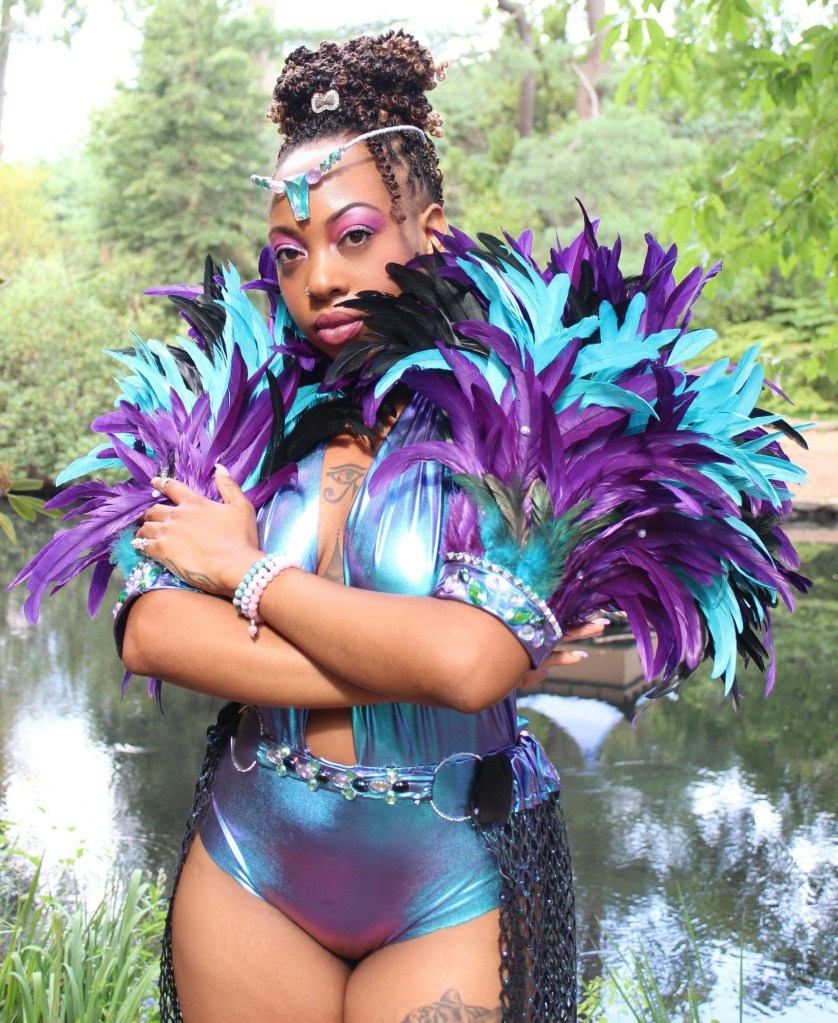
A typical female “pretty mas” costume featuring a decorated bodysuit and feathered backpack.
To understand the current state of Jamaican Carnival costumes, one must first look back at their origins. Unlike the centuries-old traditions of Trinidad and Tobago, Carnival in Jamaica is a relatively recent phenomenon, gaining significant traction in the late 20th century. Its early iterations were heavily influenced by the University of the West Indies (UWI) Carnival and the vision of Byron Lee, who sought to bring the spirit of the Eastern Caribbean to the Jamaican masses.
In those early days, costumes were often more thematic and varied. There was a greater emphasis on “character mas,” where costumes told a story or represented a specific cultural motif. Designers experimented with different fabrics, structures, and hand-crafted elements that gave each band a distinct identity. However, as the event grew in popularity and commercial scale, the influence of Trinidadian “pretty mas” began to dominate.
“Pretty mas” shifted the focus from storytelling and elaborate craftsmanship to aesthetic appeal and reveler comfort. The goal became to make the masquerader look as “pretty” as possible, often through the use of bikinis, beads, and feathers. While this transition initially brought a new level of glamour and accessibility to the road, it also laid the groundwork for the standardization we see today. The “pretty mas” aesthetic, once a revolutionary departure from traditional forms, has now become the very cage that limits creative expression in Jamaican Carnival. The most common grievance among Carnival enthusiasts today is the feeling that if you’ve seen one costume, you’ve seen them all. This “same look” phenomenon is not merely a subjective observation; in my opinion. but it is a reflection of a formulaic approach to design that has permeated the industry.
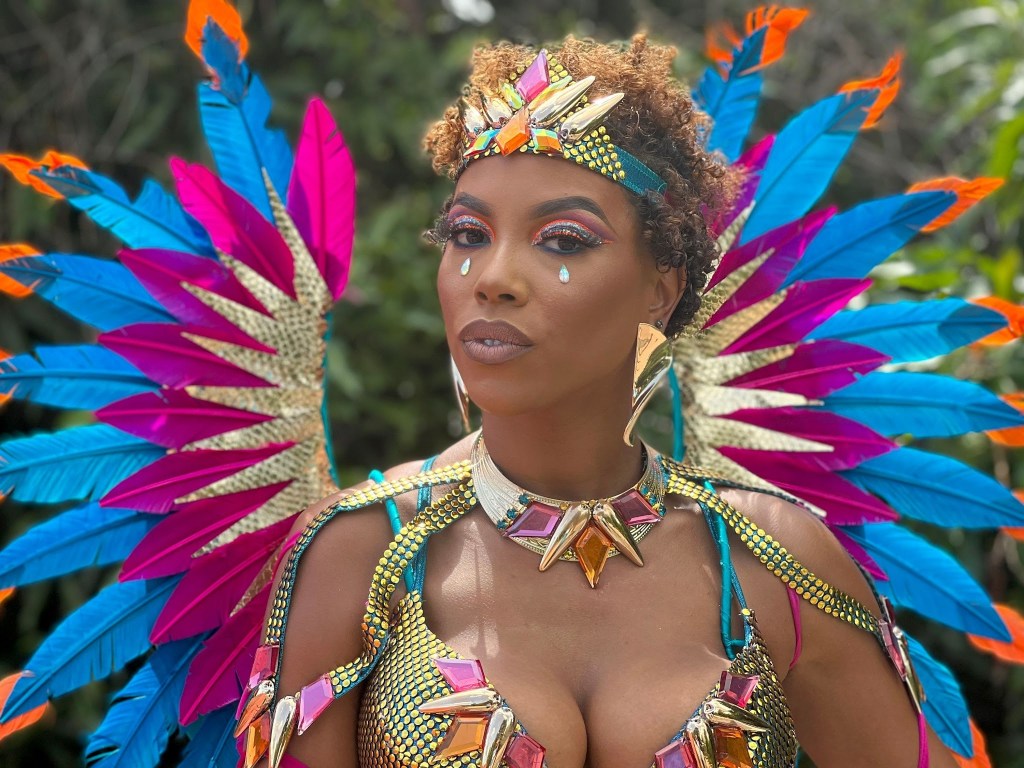
Another example of the repetitive female silhouette, with a focus on beads and feathers.
For female masqueraders, the standard costume has become almost entirely predictable. It typically consists of a decorated bra or bodysuit, a matching belt or thong, and a feathered headpiece or backpack. While the colors and the specific patterns of the beadwork may change from year to year, the underlying structure remains identical.
Designers often defend this by citing reveler demand. They argue that masqueraders want to show skin, feel comfortable in the heat, and have a costume that is easy to manage on the road. While these are valid practical concerns, they do not excuse the lack of creative variation within those parameters. The “same look” is further exacerbated by the mass production of costume components. Many of the beads, gems, and even feather frames are sourced from the same international suppliers, leading to a visual homogeneity that strips the costumes of their local artistic soul.
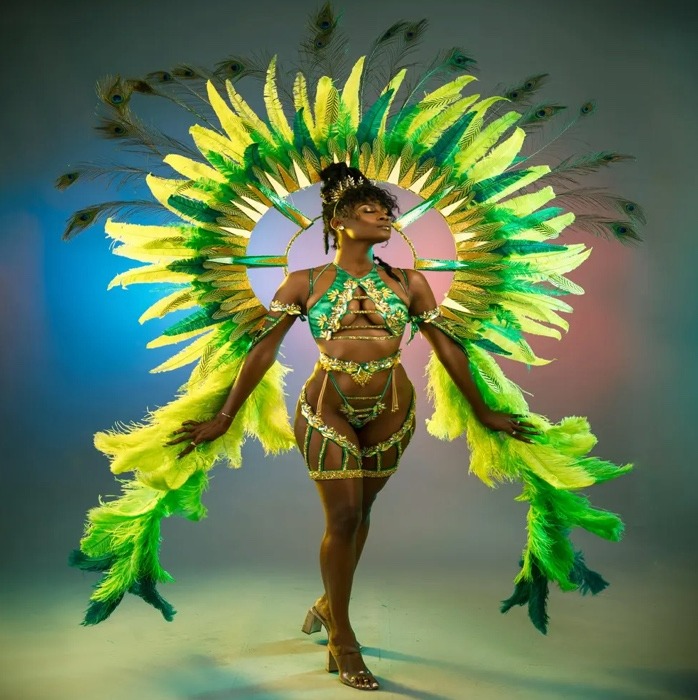
The “same look” for female masqueraders, highlighting the formulaic approach to design.
The Male Silhouette: The Forgotten Masquerader
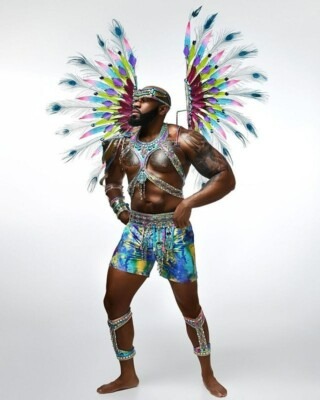
A typical male carnival costume, consisting of board shorts and basic feathered armbands.
If female costumes are repetitive, male costumes are often described as an afterthought. The “same look” for men is even more pronounced, usually consisting of a pair of board shorts, a simple waistpiece, and perhaps a small feathered headpiece or armbands. For years, male masqueraders have called for more creative options that go beyond the “shorts and a vest” formula, yet designers have largely failed to deliver.
The lack of evolution in male costuming is a significant missed opportunity. In traditional Carnival forms, male characters were often the most elaborate and imposing figures on the road. By reducing male mas to a basic, repetitive template, designers have not only alienated a large portion of the masquerading population but have also contributed to the overall visual stagnation of the parade. Several factors have contributed to the failure of Jamaican Carnival costumes to evolve. When you understand these pressures is key to identifying how the industry can move forward.
1. Commercial Pressure and the “Safe” Bet
Carnival is a business, and for band leaders and designers, the stakes are high. Producing a Carnival band involves significant financial investment, and the pressure to sell out sections often leads to “safe” design choices. Designers are hesitant to take risks with avant-garde or unconventional looks that might not appeal to the mass market. Instead, they stick to the tried-and-true “pretty mas” formula that they know will sell. This commercial conservatism is a primary driver of the “same look” phenomenon.
2. The Influence of Social Media and the “Instagrammable” Look
In the age of social media, the success of a costume is often measured by how well it photographs for Instagram. This has led to a focus on “front-facing” designs that look good in a static photo but may lack depth, movement, or intricate detail when seen in person. The desire for an “Instagrammable” look has pushed designers toward bright colors and large, flashy feather displays at the expense of more nuanced and innovative craftsmanship.
3. The Loss of Traditional Craftsmanship
As the industry has moved toward mass production, many of the traditional skills associated with costume making have begun to fade. The art of wire-bending, intricate hand-beading, and the use of non-traditional materials require time and expertise that are often sacrificed in the rush to produce thousands of costumes for a single season. Without these foundational skills, designers are limited in their ability to create truly unique and structural pieces that break away from the standard bikini-and-beads mold.
The critique of stagnant designs often falls squarely on the shoulders of the costume designers themselves. However, it is important to recognize the complex environment in which they operate. A designer’s vision is frequently tempered by the practicalities of production, the demands of band leaders, and the expectations of the masqueraders.
For female masqueraders, the “same look” is not just about the bikini and beads; it’s about the lack of structural innovation. In the past, designers experimented with different silhouettes, such as high-waisted bottoms, monokinis, and even more elaborate headpieces that didn’t rely solely on feathers. Today, however, the “pretty mas” template has become so entrenched that any departure from it is seen as a risk.
The use of feathers, while iconic to Carnival, has also become a source of repetition. The “same look” is often achieved through the use of standard feather frames and colors that are readily available from international suppliers. While these feathers add height and drama to a costume, they do not necessarily contribute to its artistic evolution. Designers who want to push the boundaries of creativity must find new ways to incorporate feathers or explore alternative materials that can provide the same visual impact without the repetitive feel.
The lack of evolution in male costuming is perhaps the most glaring example of the industry’s creative block. For years, male masqueraders have been presented with the same basic look: board shorts, a simple waistpiece, and perhaps a small feathered headpiece or armbands. This formulaic approach has not only limited the creative potential of male mas but has also contributed to the overall visual stagnation of the parade.
Designers who want to break away from the “same look” for men must explore new silhouettes and materials that go beyond the standard shorts-and-a-vest formula. This could include the use of more elaborate headpieces, structural elements that add height and drama, and even the incorporation of traditional Jamaican motifs and characters. By embracing the creative potential of male mas, designers can not only attract more male masqueraders but also contribute to the overall artistic evolution of Jamaican Carnival.
The “same look” phenomenon is not just a matter of aesthetic preference; it has real implications for the future of Jamaican Carnival. When costumes become repetitive and formulaic, the event loses its artistic soul and its ability to inspire and engage both masqueraders and spectators. Carnival is, at its core, an artistic expression. When costumes become standardized and mass-produced, the event loses its unique artistic identity. The “same look” strips the costumes of their local flavor and their ability to tell a story or represent a specific cultural motif. This loss of artistic identity can make the event feel less authentic and less meaningful to those who participate in it. When masqueraders feel that they are seeing the same looks year after year, they may become less engaged and less excited about participating in the event. The “same look” can lead to a sense of boredom and a lack of enthusiasm among seasoned masqueraders, who may eventually choose to skip the event altogether. This decline in reveler engagement can have a significant impact on the commercial success and the overall vibrancy of Jamaican Carnival. The “same look” phenomenon is a symptom of a stagnant industry that is resistant to change and innovation. When designers and band leaders stick to the tried-and-true formula, they are not only limiting their own creative potential but also the potential of the entire industry. This stagnation can make it difficult for new and innovative designers to break into the market and can prevent the industry from evolving and growing in new and exciting ways.
To break the cycle of repetition and foster a culture of innovation in Jamaican Carnival, several steps must be taken by designers, band leaders, and masqueraders alike.
Designers and band leaders must be willing to take risks and embrace innovation in their costume designs. This means moving away from the “safe” bet and exploring new silhouettes, materials, and design philosophies that push the boundaries of creativity. By embracing risk and innovation, the industry can create truly unique and structural pieces that break away from the standard bikini-and-beads mold. The industry must also invest in traditional craftsmanship and the skills associated with costume making. This means providing training and support for wire-benders, hand-beaders, and other artisans who can bring a unique and hand-crafted feel to the costumes. By investing in traditional craftsmanship, the industry can create costumes that are not only beautiful but also meaningful and authentic. Masqueraders must also play a role in fostering a culture of innovation in Jamaican Carnival. By providing feedback and engaging with designers and band leaders, masqueraders can help to shape the future of the event and encourage more creative and innovative costume designs. This could include participating in surveys, attending band launches, and sharing their ideas and preferences on social media.
A Vision for Evolution
As we look to the future of Jamaican Carnival, it is clear that the industry must evolve and grow in new and exciting ways. This means embracing a vision for evolution that prioritizes artistic innovation, traditional craftsmanship, and reveler engagement.
The future of female costuming in Jamaican Carnival must involve a move away from the “same look” and toward a more diverse and innovative aesthetic. This could include the use of new silhouettes, materials, and design philosophies that push the boundaries of creativity. By embracing a new aesthetic, the industry can create truly unique and structural pieces that break away from the standard bikini-and-beads mold. The future of male costuming in Jamaican Carnival must also involve a more creative and innovative approach. This means moving away from the “same look” and toward a more diverse and elaborate aesthetic that goes beyond the standard shorts-and-a-vest formula. By embracing a more creative approach, the industry can attract more male masqueraders and contribute to the overall artistic evolution of the parade.
Finally, the future of Jamaican Carnival costumes must involve a culture of innovation and excellence that prioritizes artistic expression and traditional craftsmanship. This means providing support and training for designers, band leaders, and artisans who are committed to pushing the boundaries of creativity and creating truly unique and meaningful costumes. By fostering a culture of innovation and excellence, the industry can ensure that Jamaican Carnival remains a vibrant and culturally significant event for years to come.
The stagnation of Jamaican Carnival costumes is a complex issue that requires a multifaceted approach to address. By embracing risk and innovation, investing in traditional craftsmanship, and encouraging reveler feedback and engagement, the industry can break the cycle of repetition and foster a culture of innovation and excellence.
The “same look” phenomenon is a symptom of a stagnant industry that is resistant to change and innovation. However, by embracing a vision for evolution that prioritizes artistic innovation, traditional craftsmanship, and reveler engagement, the industry can ensure that Jamaican Carnival remains a vibrant and culturally significant event for years to come.
The path forward for Jamaican Carnival costumes is one of artistic innovation and creative excellence. By embracing this path, the industry can create truly unique and meaningful costumes that inspire and engage both masqueraders and spectators alike.
This image represent the “same look” for male masqueraders, featuring the standard board shorts and simple feathered accessories.
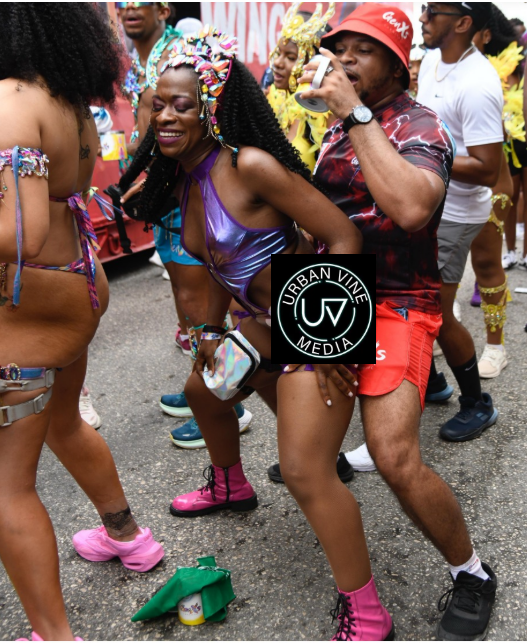
Another example of the repetitive male silhouette, highlighting the lack of creative variation.
By analyzing these images, it is clear that the industry has failed to truly evolve, leaving us with a repetitive “same look” that has become the industry’s stagnant hallmark. The path forward for Jamaican Carnival costumes is one of artistic innovation and creative excellence, and it is up to designers, band leaders, and masqueraders alike to embrace this vision for evolution


Leave a Reply