

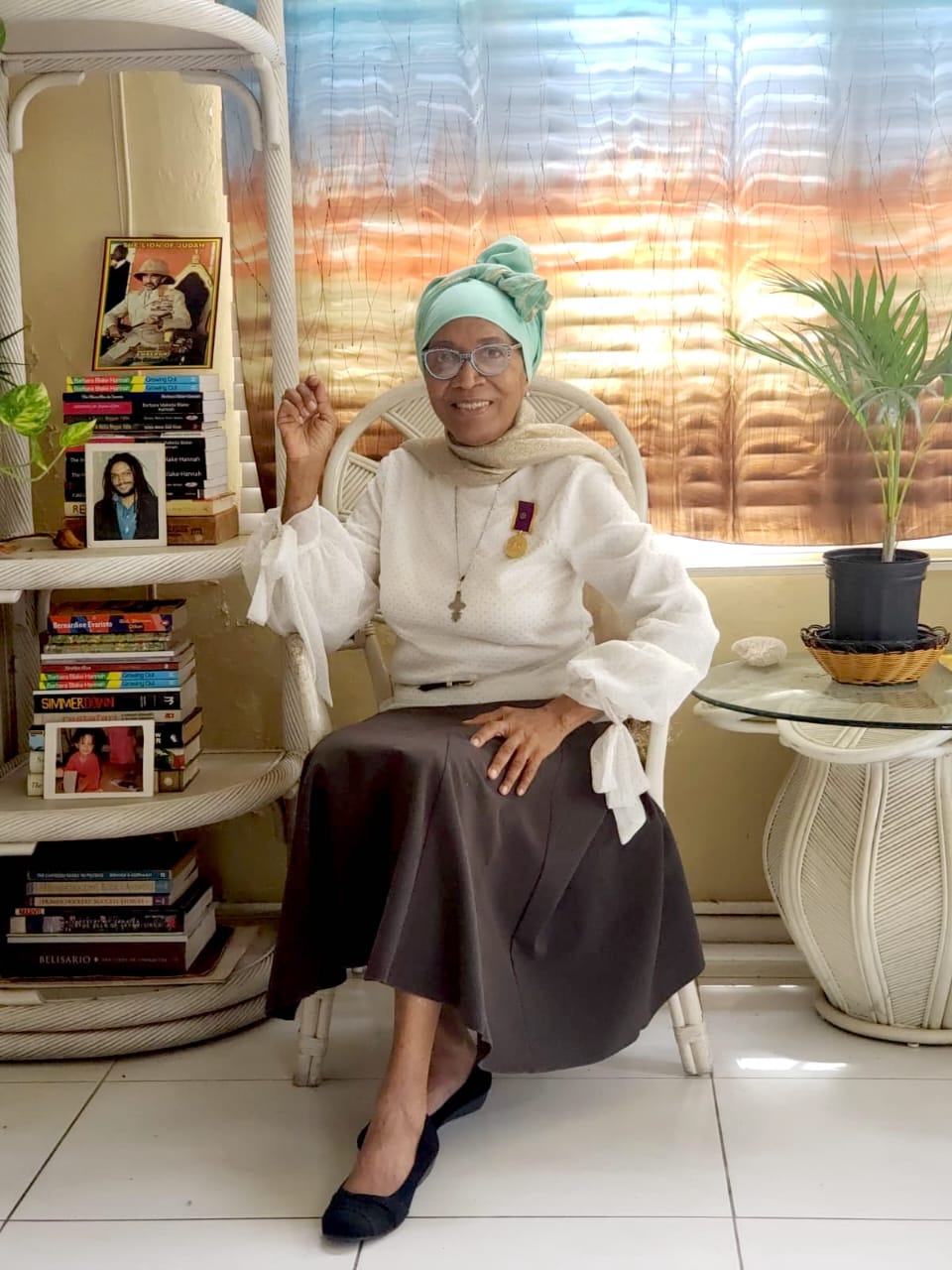
Barbara Makeda Blake-Hannah and The Jamaica Reparations Handbook

For 400 years, millions of Africans endured institutionalised enslavement in the Western world. Over a century later, the descendants of those enslaved people consequently experience significant generational wealth gaps, land disparity, and structural inequality. Yet, the conversation persists that Black people are not the only racial group to have experienced such tragedy — that is left for debate. Nonetheless, what can be agreed upon is that the descendants of slaves are one group that has yet to be financially compensated for what can be globally recognised as a crime against humanity. Money does not erase the inhumanity and cruelty that Africans endured throughout the Atlantic slave trade and slavery; however, it does somewhat level the playing field for a people who have been significantly undermined and oppressed throughout history. Indeed, in 2026, the fight for freedom continues — and among the voices advocating for long overdue redress is the duly decorated Barbara Makeda Blake-Hannah, O.D., O.S.E., who has recently published The Jamaica Reparations Handbook.
Blake-Hannah is not new to this — she is, in fact, true to this. Her work for reparations is widely marked from 2001, when she served as part of the Jamaican delegation to the UN World Conference Against Racism in Durban, South Africa, where she was appointed to the special plenary on Reparations, thereafter establishing the Jamaica Reparations Movement. And while 2001 stands as a landmark in her career as it relates to this work, it is important to note that her advocacy began long before, having experienced many firsts that ultimately did not last, owing to her also being a descendant of that same oppressed race. Namely, she was the first Black journalist to appear on British television in a non-entertainment capacity, working on the daily evening news programme Today with Eamonn Andrews on Thames Television. This lasted only nine months, as her producer acknowledged that the company was under pressure from viewers objecting to a Black woman on television. It would not be the last time she faced such an indictment.
Nonetheless, she went on to do great things beyond journalism. Chris Blackwell and Perry Henzell offered her a position in 1972 as public relations officer for The Harder They Come, the first Jamaican feature film. She went on to direct several films and lecture at several universities. She is also the first Rastafarian to hold a seat in Jamaica’s Parliament — further cementing her legacy as a catalyst for change in Black societies existing beyond the scope of, yet never far from the shadow of, slavery in the western world.
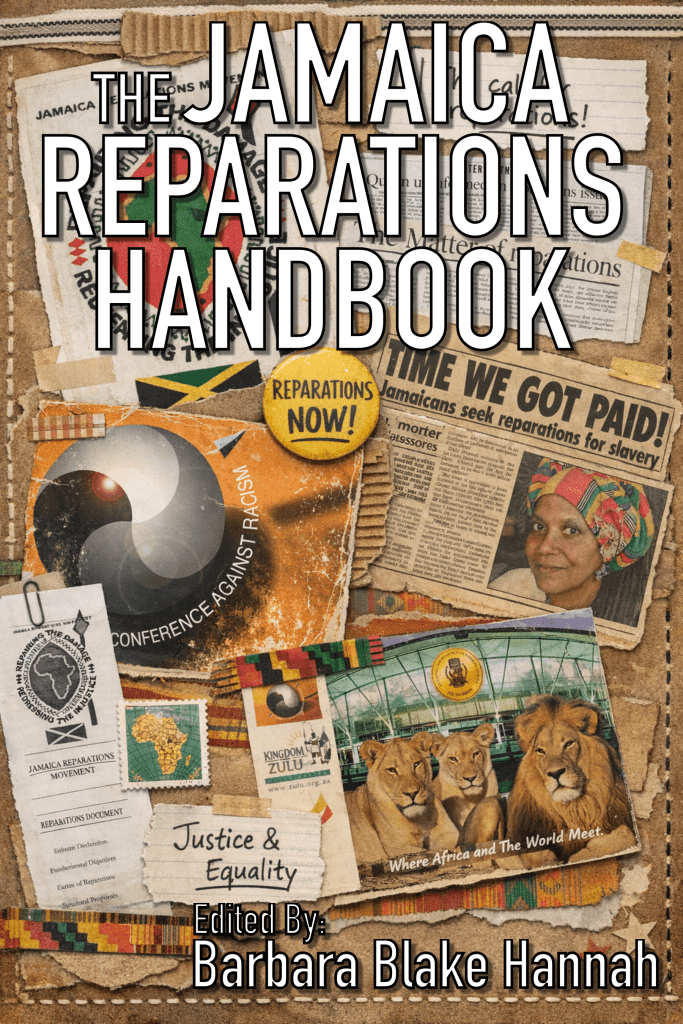
This, however, is not a biography of the author, but rather a showcase of how over half a century of lived experience and 25 years of dedicated work for reparations can culminate in The Jamaica Reparations Handbook. And notice — it is a handbook, which means it is a necessity. For everyone who wants to be part of the advocacy and the journey towards reparations, it is a resource for knowing what has been done and what still needs doing in pursuit of the compensation owed by oppressive nations.
The Jamaica Reparations Handbook is an edited selection of documents and articles on reparations that Blake-Hannah has been collecting since attending the 2001 UN World Conference on Racism in Durban, South Africa. It is also a crucial resource for the Caribbean reparations movement — a collection of critical documents and articles on the history, struggle, and law surrounding the case for reparations. The Handbook includes a full transcript of The Abuja Declaration: The Legal Basis of the Claim for Reparations, documents from the UN World Conference Against Racism, as well as chapters from two important books on slavery: Blood Legacy by Alex Renton and The Sugar Barons by Matthew Parker. The book also includes articles by Harvard Professor Vincent Brown, author of Tacky’s Revolt, and UK-based author Ras Cos Tafari, publisher of I.N.R.I. Magazine, as well as reports from Blake-Hannah’s years as a reparations activist.
The fight continues — and if you would like to put your hands on a piece of ammunition, a much-needed weapon for change, the book is available now on Amazon: https://www.amazon.com/dp/B0GRTZP9NW?ref=sp_email
About the Author
Barbara Makeda Blake-Hannah is a Jamaican author, journalist, and filmmaker. In 1968, she became the first Black journalist on British TV. In Jamaica, she has written books on Rastafari cultural history, homeschooling, and two novels, as well as having made documentaries and children’s films. She has served in the Jamaican Parliament as an Independent Senator and has been awarded the Jamaican Order of Distinction (O.D.). In 1998, she was presented with the Adwa 100th Anniversary Gold Medal by the Ethiopian Crown Council, who in 2024 appointed her an Officer of the Order of the Star of Ethiopia (O.S.E.). Other awards include the United Nations Peace Medal, the Institute of Jamaica Silver Musgrave Medal for Literature, and the Marcus Garvey Lifetime Achievement Award.
The Jamaica Reparations Archive was deposited at the National Library of Jamaica in 2024.


Written by K L Williams
Kerece Lilanie Williams is a poet and educator, and the author of three poetry collections published under the name Lilanie: Kisses and Lies, Above Water, and Faith and Favour: Odes of Gratitude for Unmerited Grace. She contributes her writing to Urban Vine Media, a creative initiative that fosters intellectual conversations around arts, culture, and entertainment in Jamaica and the diaspora.
She is also the founder of Write Ah Yaad, a vibrant writing community for Caribbean poets and storytellers, and the Chief “Copy Cat” behind MeowMedia Services, a platform helping creative entrepreneurs create and build their brands—because kats roar with MeowMedia.


Leave a Reply