


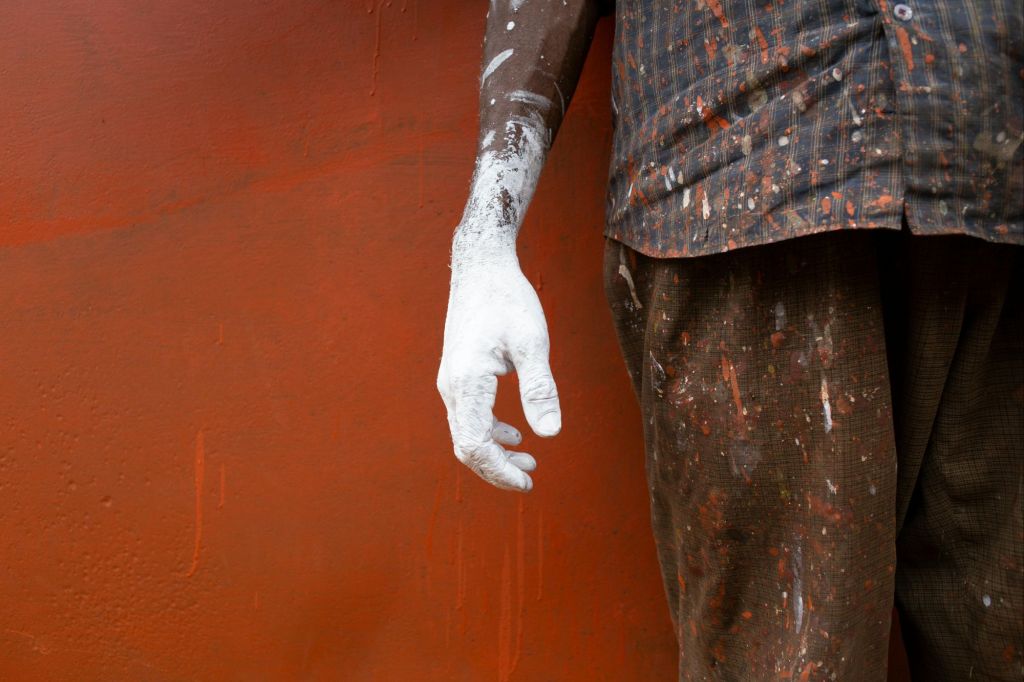
There’s a graveyard filled with the corpses of art left unfinished—half-done manuscripts, half-painted canvases, hardened pottery clay, songs unsung, musical scores that never found their orchestras. This graveyard isn’t hard to find; it’s located somewhere on the Street of Doubt, once you take a left from the Boulevard of Broken Dreams.
No war occurred—or has it?—as these pieces have received no proper funeral, dumped in a mass grave as though they were nothing more than stray dogs who found themselves on a highway during rush hour. But what brings them here?
Unfortunately, starvation is the ultimate culprit. And with no famine, this is quite the anomaly. Art never starves on its own; it is starved deliberately and systematically—by fear, by economics, by isolation, by delayed permission, and by time itself.
The Road Less Travelled
A conversation ensued the other day, asking whether it made more sense to pursue your dreams or choose a career that you know will simply pay well. I at least expected a 50/50 response. No—everyone said they’d choose a career that pays first and then perhaps use it to fund their dreams.
The reality is, we know that rarely ever happens. A career typically requires a particular degree of dedication that leaves very little focus on anything else. There’s rarely any space for a hobby, much less a side career in art. The promise of “later,” a mere bystander, is then falsely accused of postponement—but “later” seldom comes.
Several people have found a formula to have both, often in their later years—typically when they’re on the cusp of retirement or madness, when the need to create starts to bite at them like parasites that must be fed. Maybe that’s a grotesque simile, but that is the reality. It often leads to spiritual fatigue from serving two gods.
At that point, it becomes much too difficult to abandon the god that has fed, clothed, and anchored you for years, having no faith in the next god which, though appealing, never came with the promise of material fulfillment.
So, I withheld my response from the conversation, realizing I would have selected the road less traveled and, in doing so, dishonored what the majority had already decided was simply good sense.
I’m reminded, however, by Robert Frost in the poem The Road Not Taken:
> “Two roads diverged in a wood, and I—
I took the one less traveled by,
And that has made all the difference.”
Art Is Never Truly a Solo Act
When the poet meets the painter, only then is an ekphrasis born. Or let’s bring it down to another sense—the poet meets the composer, and you get a song. The song is brought to a singer. They meet a photographer and a graphic designer and get an album cover. And there, they have something tangible—worth being sold, thought of, and looked upon.
And these are just the artists involved. There are still many other professionals and professional abilities that must be incorporated in order for art to become a business, or at least be known on a large scale. This introduces another difficulty in pursuing a career in artistry: alignment and collaboration.
Of course, having multiple skills makes one more marketable, and we’ve seen how artists like Kanye West, Doja Cat, and Chlöe Bailey—having the ability to compose, write, sing or rap, and perform—gained a significant advantage. However, many people have specialized skills, and even in cases of versatility, reinforcement by specialists is typically needed in end-stage production beyond the demo version.
The reality is, no man is an island, and collaboration often yields better results. But joining forces also breeds conflict. Getting through the storming phase of team building is a tumultuous task, and it rarely occurs. Only the few who break past that barrier ever truly reap the rewards of a functioning creative ecosystem.
Time Is the Master
In an interview—several interviews, actually—Shelly-Ann Fraser-Pryce mentioned that track wasn’t her dream; it was her mother’s. Her mother was a track star who never got to realize her dream, and she took up the baton to become one of the fastest women to have ever lived.
Several greats among us—musicians, singers, artists—are second-, third-, and even fourth-generation talents. The reality is, things take time, and there must be a willingness to give things time. Oftentimes, the realization of dreams doesn’t occur in the teens, twenties, or even thirties. And when that happens, it is rarely the first generation of artistry we are witnessing.
People only see the ascent. Very rarely do we see the years of labor, the abandoned drafts, the lineage of resilience and persistence that precedes visibility.
Closing
Artistry isn’t an afterthought. It’s a deliberate and intentional discipline, arrogant by all means, refusing to be the stepchild among our affairs. Irrespective of this reality, our doubts, fears, and “responsibilities” leave us looking at our famished stories, songs, and sounds—bothered but unmoved. True artistry must be watered, maintained, and manicured in order for it to flourish; otherwise, it withers quickly and soon becomes another promising, now-lifeless body of work dumped in a landfill, buried in the graveyard of mere imagination, never to be seen, known, or understood.
K L Williams
Writer, Urban Vine Media
 Urban Vine Media
Leave a comment