

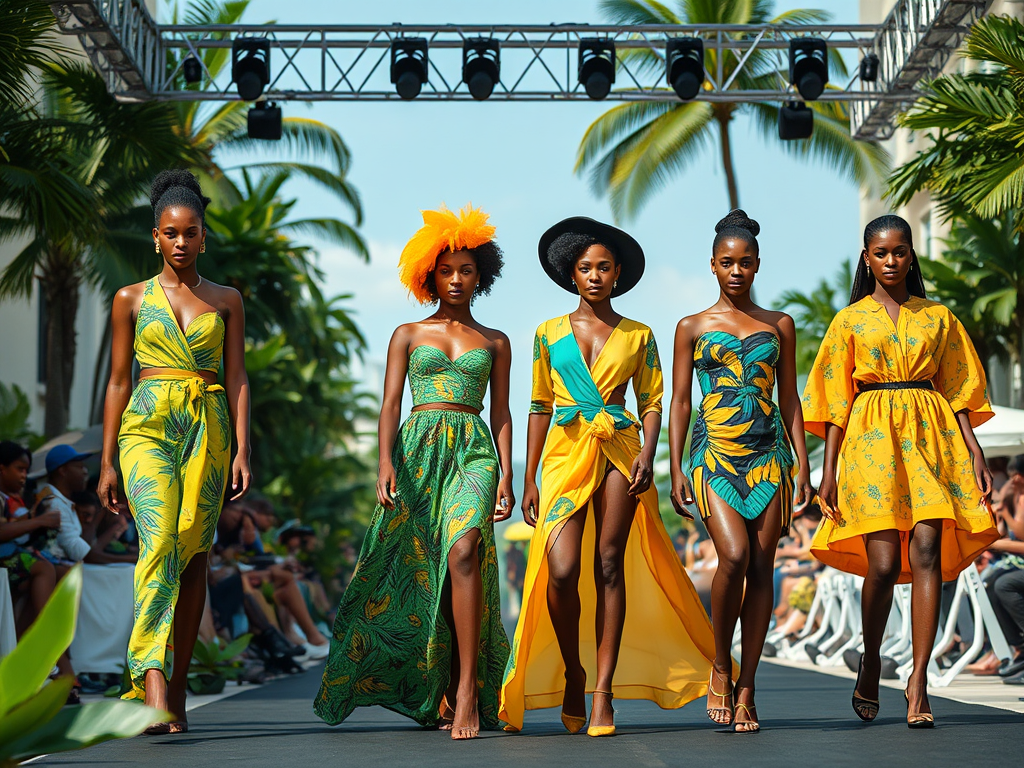
Jamaica and the Global Fashion Weeks: Why the Time is Now
Every year, the global fashion industry experiences a kind of cultural pilgrimage. Crowds of designers, stylists, models, photographers, buyers, journalists, and celebrities converge on the “Big Four” cities—New York, London, Milan, and Paris—for Fashion Week. In a matter of days, new trends are born, billion-dollar deals are struck, and entire economies are energized. These fashion capitals have built institutions that allow them to set the tone for global culture, reminding the world that fashion is not just fabric—it is identity, power, business, and storytelling.
But as Fashion Weeks return in 2025, an urgent question emerges: where is Jamaica in this global conversation?
The island is globally renowned for music, athletics, and cultural influence far beyond its size. Yet, in fashion, Jamaica often plays a background role despite its massive creative potential. As the world increasingly craves authenticity, diversity, and cultural narratives, this is the moment for Jamaica to act. The country has the talent, the heritage, and the story—but it must now build the structures to take its place on the global stage.
The History of Fashion Weeks: Lessons for Jamaica
The modern concept of Fashion Week began in New York during World War II, when designers sought to attract attention away from Paris, which was occupied at the time. Over decades, the “Big Four” institutionalized the fashion cycle: designers present collections months in advance, buyers place orders, magazines curate narratives, and economies benefit from the cultural halo.
Other countries have followed suit, with events like:
- Lagos Fashion Week in Nigeria, which has become a hub for African luxury and streetwear.
- São Paulo Fashion Week in Brazil, which highlights Latin American voices.
- Tokyo Fashion Week, fusing high-tech futurism with Japanese tradition.
What these regions understood is that fashion is global diplomacy. When Nigeria holds Lagos Fashion Week, it’s not just showing clothes—it’s telling the world: We exist, we are relevant, and we are innovators.
Jamaica, with its unmatched cultural capital, should be doing the same.
Fashion in Jamaica is not imported—it is lived.
- Dancehall Culture: Streetwear in Europe and the US has long borrowed from the boldness of dancehall, whether it’s oversized silhouettes, graphic prints, or daring cuts. Rihanna, Beyoncé, and even high-fashion houses have tapped into aesthetics born in Kingston.
- Reggae and Rastafari: The red, gold, and green, along with natural textiles, have shaped global festival fashion.
- Caribbean Elegance: From the crisp white linens of the tropics to the bold carnival costumes, Jamaica blends practicality with flamboyance.
- Heritage Craftsmanship: Jamaica has a deep tradition of tailoring, handwoven fabrics, and artisanal jewelry that is underutilized in the luxury space.
Jamaica already influences global fashion indirectly. The challenge now is to claim ownership of that influence and transform it into a sustainable, profitable industry.
There are fashion showcases on the island, but they remain fragmented and underpublicized. To compete with Lagos or São Paulo, Jamaica must institutionalize a national fashion week that is strategically timed with the global fashion calendar.
This event should:
- Be backed by government, tourism boards, and corporate sponsors.
- Invite international buyers, journalists, and influencers.
- Stream globally to position Jamaica as more than a spectator.
Done correctly, Jamaica Fashion Week could be a cornerstone of cultural tourism, just like Reggae Sumfest or Carnival.
Fashion is more than art; it is economics. France treats fashion as a national export, with billions invested annually in protecting and promoting luxury houses. Jamaica must follow suit.
Concrete actions could include:
- Tax incentives and grants for young designers and garment producers.
- Partnerships with JAMPRO to market Jamaican fashion abroad.
- Public-private collaborations with hotel chains, airlines, and international retailers.
- Fashion as tourism: Packages that allow visitors to attend shows, shop local designers, and experience Jamaican style firsthand.
Without skilled labor, creativity dies. Jamaica must create world-class fashion education programs, including:
- Specialized degrees in design, textile technology, fashion marketing, and luxury branding.
- Exchange programs with fashion capitals like Paris and Milan.
- Workshops to train seamstresses, pattern makers, and fashion marketers.
Imagine if Edna Manley College partnered with Parsons or Central Saint Martins. The ripple effect would be massive.
Currently, many Jamaican designers rely on imports for textiles and production, which limits scalability. To compete, Jamaica must invest in:
- Textile labs that research eco-friendly fabrics (like hemp or bamboo).
- Small manufacturing hubs that allow designers to produce locally at competitive costs.
- Export networks that make Jamaican fashion available in New York, London, and beyond.
This would not only empower designers but create jobs for hundreds in garment production.
In 2025, fashion is as much about screens as it is about seams. Runways now live on TikTok, Instagram, and YouTube.
Jamaican designers should:
- Livestream shows for global audiences.
- Use e-commerce platforms to sell directly to buyers worldwide.
- Collaborate with influencers to amplify Jamaican fashion aesthetics.
This democratization means that Jamaica doesn’t need to wait for Paris to “accept” it—the island can build its own audience.
Jamaica has already contributed heavily to the modeling world. Agencies like Pulse and Saint have produced global stars who walked for Gucci, Prada, and Balmain. Designers like Cedella Marley keep cultural heritage alive.
But Jamaica must do more to celebrate and institutionalize these contributions, treating them as ambassadors of national pride. At the same time, platforms must be created for emerging designers and stylists to step into the spotlight.
Who’s Doing It Right?
Nigeria (Lagos Fashion Week)
Nigeria positioned itself as Africa’s style hub by combining runway shows with government and corporate partnerships. Today, Lagos Fashion Week attracts global media, and Nigerian designers are stocked in major retailers worldwide.
South Korea (Seoul Fashion Week)
Once overlooked, South Korea leveraged K-pop to power fashion. Idols wearing Korean brands turned Seoul Fashion Week into a global destination. Jamaican music stars could do the same.
Jamaica’s Music Model
Think about reggae: Jamaica didn’t wait for validation. It built its own festivals, exported its sound, and the world came knocking. Fashion can follow the same trajectory.
Fashion is a trillion-dollar global industry. Even a modest slice could add hundreds of millions to Jamaica’s GDP. Beyond designers, the ripple effect would benefit photographers, models, stylists, manufacturers, and retailers.
By controlling its narrative, Jamaica would stop being imitated without credit. The world already copies dancehall style—why shouldn’t Jamaica profit?
Fashion gives young people creative outlets and viable careers. It can turn at-risk youths into entrepreneurs and global trendsetters.
The global fashion industry is shifting. Consumers are rejecting cookie-cutter luxury and searching for stories, identity, and authenticity. Jamaica has all three in abundance.
The world already dances to our music and cheers for our athletes. Why shouldn’t it wear our fashion?
As Fashion Weeks unfold in New York, Milan, London, and Paris, Jamaica must decide: will we continue watching from the sidelines, or will we step boldly into the light?
The runway is waiting, and Jamaica is ready.
 Urban Vine Media
Leave a comment