


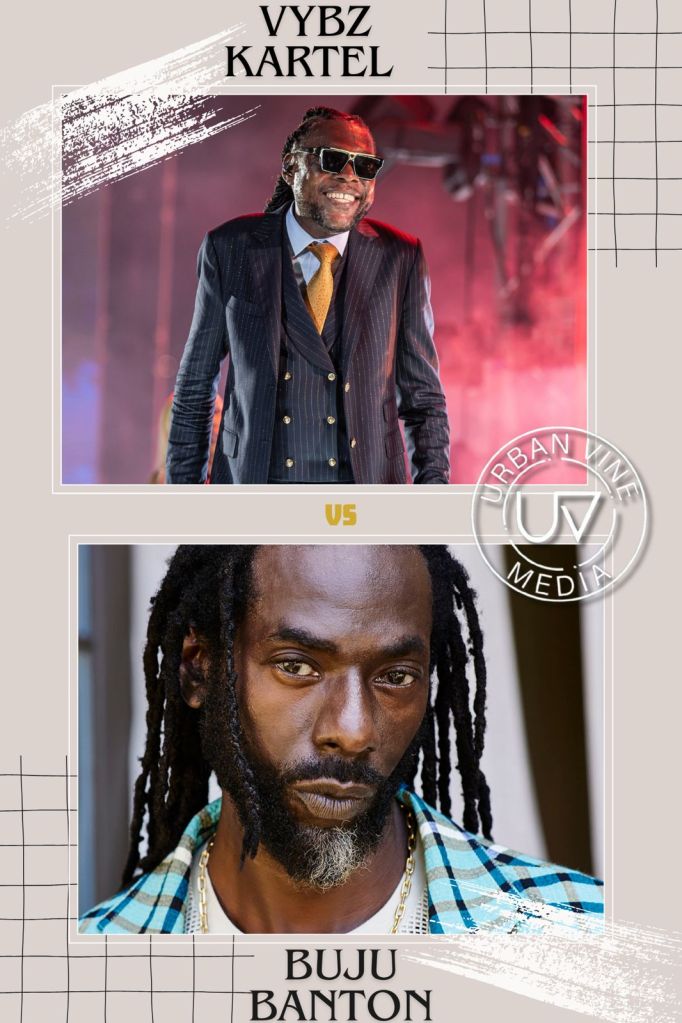
In the rich and ever-evolving landscape of Jamaican music, two genres have long stood as
pillars of the island’s cultural identity: Reggae and Dancehall. Among their champions, Buju Banton and Vybz Kartel have emerged as titans in their own right—both influential,
controversial, and undeniably talented. But in the current moment, as the pulse of the streets beats harder for Dancehall, it’s becoming increasingly clear: Buju Banton has struggled to generate the cultural energy and momentum for Reggae music in the way that Vybz Kartel continues to do for Dancehall.
Buju Banton: A Legend, But Out of Step?
Buju Banton’s legacy is secure. From his early Dancehall days to his spiritual Reggae
reinvention in the late ’90s, albums like ‘Til Shiloh and Inna Heights positioned him as one of the few artists capable of blending consciousness with commercial success. His influence is deep, and his artistry is respected worldwide.
However, since his release from prison in 2018 and subsequent return to the stage and studio, Buju’s impact has not reverberated as expected. His post-incarceration album Upside Down 2020 received critical acknowledgment but failed to reignite the flame of Reggae in the streets or among the younger generation. Despite his iconic status, Buju’s newer releases have lacked the raw urgency and cultural relevance needed to spark a movement or shift the musical conversation.
Vybz Kartel: The Engine of Dancehall
Contrast this with Vybz Kartel, whose influence remains volcanic—even from behind bars.
Kartel’s lyrical output, social commentary, and innovative sounds continue to dominate playlists, charts, and conversations. He’s been instrumental in shaping the soundscape of modern Dancehall, introducing slang, style, and controversy that galvanize youth culture in Jamaica and beyond.
While Buju represents a revered past and moral compass for Reggae, Kartel is a living
current, ever-present in street parties, social media, and daily dialogues. His music resonates with the lived realities of Jamaica’s youth: raw, unfiltered, and often rebellious. Kartel isn’t just releasing songs—he’s influencing fashion, language, and attitude. That’s energy.
The Genre Dilemma: Reggae’s Decline in Popularity?
The challenge for Buju Banton may not lie entirely with him, but with the genre he champions. Reggae has been losing ground in its own birthplace, viewed by some as either too preachy, outdated, or disconnected from the socioeconomic realities facing young Jamaicans today. Its pace, its themes, and its delivery struggle to match the high-octane, digitally driven, and emotionally raw nature of modern Dancehall.
Buju’s message—rich with Rastafarian consciousness and calls for upliftment—often lacks the immediacy that the younger crowd seeks. Meanwhile, Kartel offers a voice that matches the chaos, beauty, and contradictions of the modern Jamaican experience.
Why Buju Hasn’t Sparked a Reggae Revival
There are several reasons Buju Banton hasn’t been able to energize Reggae in the way Kartel energizes Dancehall:
- Cultural Disconnect: Buju’s music appeals more to an older demographic, while
younger audiences gravitate to the digital, trap-infused beats of current Dancehall. - Lack of Consistent Output: While Kartel releases music relentlessly, Buju has taken a
more measured, traditional approach—out of step with today’s rapid-fire release culture. - Changing Media Landscape: Reggae artists have been slower to adapt to TikTok,
YouTube trends, and other modern marketing tools that Kartel’s team and fans utilize
heavily. - Message vs. Mood: Reggae preaches; Dancehall parties. In a time where escapism
and bravado dominate the musical mood, conscious messages struggle to break
through.
Conclusion: The Torch Is Flickering
Buju Banton remains an icon, and his contributions to Jamaican music are undeniable. But in terms of generating energy, capturing the zeitgeist, and driving a genre forward, he has not managed to do for Reggae what Vybz Kartel continues to do effortlessly for Dancehall.
This doesn’t mean Reggae is dead, or that Buju is irrelevant—it means that Reggae needs a new strategy, new voices, or a recalibration to connect once more with the youth and the culture at large. Whether Buju can be part of that evolution remains to be seen. For now, the streets are speaking—and they’re still chanting Kartel’s name.
 Urban Vine Media
Leave a comment